
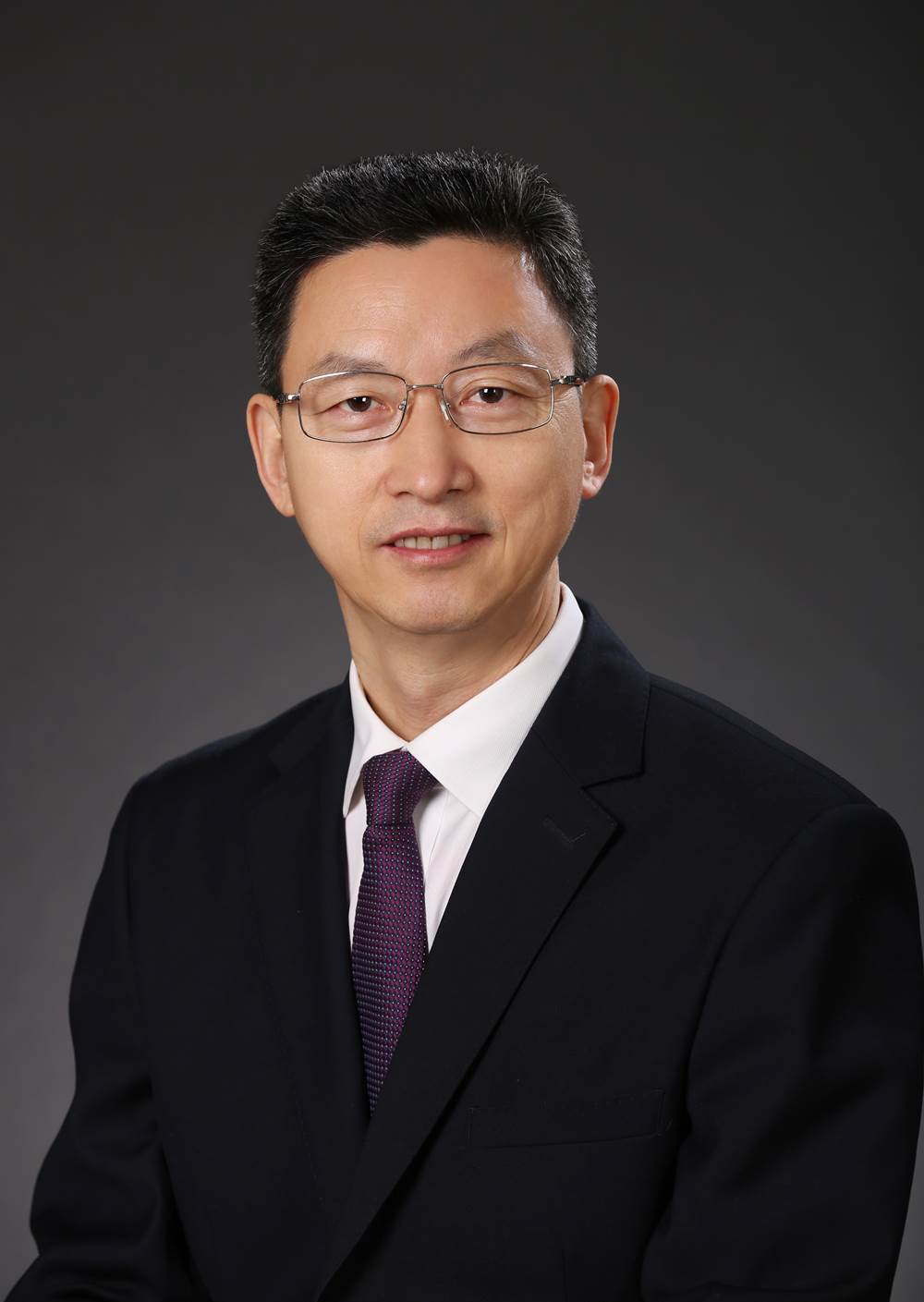
 | Prof. Daqing Zhang (IEEE Fellow, Member of the Academia Europaea (MAE), CCF Distinguished Member)Peking University, China Daqing Zhang is a Boya Chair Professor at Peking University,a Fellow of IEEE and Member of the Academy of Europe. His research interests include ubiquitous computing, AIoT and wireless sensing. He has published more than 400 technical papers in leading conferences and journals, with a citation of over 35800 and H-index of 99. He developed the OWL-based context model and Fresnel Zone-based wireless sensing theory, which are widely used by pervasive computing, mobile computing, wireless networks and service computing communities. He was the winner of the CCF TCPC Highest Science and Technology Award, the Ten Years CoMoRea Impact Paper Award at IEEE PerCom 2013, and the Ten Years Most Influential Paper Award at IEEE UIC 2019 and FCS 2023, the Best Paper Award Runner-up at ACM MobiCom 2022, the Distinguished Paper Award of IMWUT (UbiComp 2021), etc.. He will be the honorary/general chair of the flagship conference ACM UbiComp/ISWC 2026, and led his team in Peking University winning the Champion of ACM MobiCom - SDP Sensing Challenge 2025. Title: Intelligent Contactless Sensing with WiFi and NearLink Signals Abstract:WiFi and NearLink have emerged as ubiquitous short-range wireless technology designed for high-quality network connectivity. In this talk, we intend to explore the sensing potential and opportunities of WiFi and NearLink beyond wireless communication. We systematically investigate the contactless sensing theory for WiFi and NearLink signals, applying the theory and techniques to intelligent sensing applications in smart homes, hospitals and cars. This talk will present the intelligent wireless sensing theory, techniques and prototype applications developed in detail. |
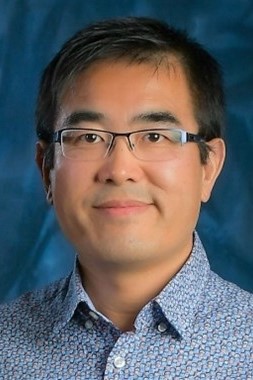
 | Prof. Jianmin WangTsinghua University, China He currently serves as Dean and Professor of the School of Software, Tsinghua University. He received his Bachelor’s degree from the Department of Computer Science, Peking University in 1990, and his Doctoral degree from the Department of Computer Science, Tsinghua University in 1995.His research has long focused on fundamental industrial software. He has addressed the technical challenges including cross-product-lifecycle data management for the equipment manufacturing industry, edge-cloud collaborative database architectures, open file formats for time-series datasets, and temporal-spatial fundamental models integrating mathematical theories and data analytics. He has developed a series of fundamental software products such as product lifecycle management system TiPLM, industrial time-series database IoTDB, and spatial-temporal prediction large models Timer. His achievements have ranked top in multiple authoritative international database benchmarks, and the developed technologies and products have been widely deployed in enterprises including AVIC Chengdu Aircraft Industrial (Group) Co., Ltd., Baowu Group and China National Nuclear Corporation, delivering remarkable social and economic benefits. He has been awarded funding from the National Science Fund for Distinguished Young Scholars and the Innovative Research Group Project on Industrial Big Data Software sponsored by the National Natural Science Foundation of China. To date, he has won two Second Class Prizes of the National Science and Technology Progress Award and three First Class Prizes at the provincial and ministerial levels. Title: Architecture and Key Technologies of Industrial Time-Series Data Repository Abstract: In the era of artificial intelligence, software systems have evolved into a hybrid form integrating Software 1.0 based on traditional programming code, Software 2.0 driven by large-scale neural network models, and Software 3.0 empowered by natural language prompts. Nowadays, complex equipment has evolved into intelligent networked products, further evolved into clusters of mechanical equipment, and ultimately stimulate the modern intelligent systems that span the primary, secondary and tertiary industries in the future. This report analyzes the challenges encountered in the full workflow from data collection to data utilization within the Industrial Internet, and elaborates on the architectural innovations of the industrial time-series data repository. First, the physical scheme, file format-TsFile, is decoupled from the IoTDB database management system, enabling it to serve directly as the storage schema for perceptual data on equipment terminals. Second, TsFile is adopted as the standard file format for time-series datasets to train the Timer time-series model on AINode. Finally, this paper presents the deployment schemes of TsFile, IoTDB, AINode and Timer across two core links of the high-end equipment Internet: the uplink data chain, from equipment to cloud, covering terminal data collection, edge aggregation and cloud-side processing, as well as the downlink model chain, from cloud to equipment, including cloud-based model training, edge inference and terminal execution. |
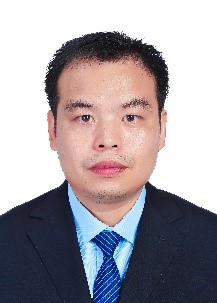
 | Prof. Caifeng ShanNanjing University, China Caifeng is a Professor, Ph.D. Supervisor, and a national-level leading talent.He currently serves as the Associate Dean of the School of Intelligence Science and Technology at Nanjing University, the Associate Dean of the NJU-China Mobile Joint Research Institute, and the Director of the NJU-Siemens Joint Research Center for Artificial Intelligence. He received his Bachelor's degree from the University of Science and Technology of China, his Master's degree from the Institute of Automation, Chinese Academy of Sciences, and his Ph.D. from the University of London, UK. Subsequently, he worked for over a decade at Philips Research in the Netherlands as a Senior Scientist and Team Leader, while also holding a research position at Eindhoven University of Technology.His research primarily focuses on computer vision, pattern recognition, and medical artificial intelligence. He has led numerous research projects funded by the European Union and the Netherlands, as well as projects under China's National Talent Program (Innovative Long-Term), the National Major Science and Technology Project for Next-Generation Artificial Intelligence, the Ministry of Education's Discipline Breakthrough Pilot Program, the NSFC Original Exploration Program, and key university-industry collaboration projects with China Mobile. He has published over 200 papers and holds more than 100 granted patents across various countries.He has received the Philips Invention Award and has been recognized as a Philips High Potential talent. He serves as a Standing Director of the China Society of Image and Graphics (CSIG). He has also served as an editorial board member for more than 10 international journals, including npj Digital Medicine, Pattern Recognition, IEEE J-BHI, and IEEE T-CSVT. Title: Camera-based Physiological Measurement Abstract: Camera-based physiological measurement has received lots of attention in fields such as computer vision and biomedical engineering in recent years. Compared to widely used contact-based biosensors, non-contact optical imaging offers numerous advantages and serves as a key pathway toward unobtrusive and intelligent health monitoring. Representative photoplethysmography imaging techniques, which enable non-contact monitoring of peripheral circulation and multiple vital signs (e.g., heart rate, respiratory rate, blood oxygen saturation) through video analysis, have been well studied. In recent years, other related technologies have also been explored and investigated. This talk presents some recent research advances. |
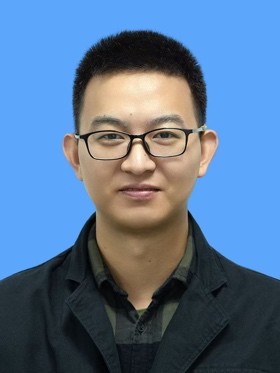
 | Prof. Zan Gao (IEEE Senior Member)Tianjin University of Technology, China Gao Zan, Vice Dean of the School of Computer Science, Tianjin University of Technology, Professor and Doctoral Supervisor, and Top 2% Scientists in the World, and Deputy Director of the Key Laboratory of the Ministry of Education. In recent years, he has presided over or participated in more than 20 provincial/ministerial-level and above research projects including Key Programs of the National Natural Science Foundation of China and National Key R&D Programs. He has published over 60 papers in top journals or conferences such as TPAMI, TIP, TIFS and CVPR, among which six papers are selected as ESI Highly Cited Papers. He was awarded the Best Student Paper Award at SIGIR in 2021. Besides, he has won three First-Class Provincial Science & Technology Progress or Technical Invention Awards and been granted more than 60 authorized invention patents. Currently, he is a Distinguished Member of China Computer Federation (CCF) and Senior Member of IEEE, as well as an Associate Editor/Editorial Board Member for multiple international journals including TDSC, Neural Networks and THMS. Title: Social Media Risk Content Recognition in Complex Open Environments Abstract:With the rapid development and widespread adoption of generative artificial intelligence in open environments, risk content resulting from the malicious use of AIGC technology poses severe threats to social stability and national security. Traditional risk content detection algorithms struggle to effectively address challenges such as data heterogeneity, high noise levels, missing modalities, and data dependency in social media data within open environments. Therefore, this report focuses on risk content detection technologies for social media in open environments, presenting the relevant research achievements of our research group in this field. |
 | Senior Engineer Peishun LiNational Supercomputer Center in Tianjin, China Senior Engineer Peishun Li has long been engaged in interdisciplinary research at the intersection of artificial intelligence and biomedicine. Leveraging the Tianhe "Super-Intelligence-Data" integrated computing environment, his/her current research focuses on AI-driven target discovery and drug molecular design. He/she has served as Principal Investigator for several international and national research projects, including grants from the Novo Nordisk Foundation (Denmark), the Knut and Alice Wallenberg Foundation (Sweden), the National Key Research and Development Program of China, the National High-Level Overseas Talents Program (QM), the Tianjin Key Research and Development Program, and open projects of State Key Laboratories. He/she has authored over 10 high-impact papers in internationally renowned journals such as Nature Medicine, npj Biofilms and Microbiomes, and Metabolic Engineering, and holds 6 patents and 4 software copyrights. Some of his/her research outputs have been recognized as Wiley’s Highly Cited Articles of the year. Title: Novel Drug Discovery Driven by AI and HPC Abstract: First, the background of drug research and development is introduced. Then, the self-developed AI-based protein structure prediction model, the ultra-large-scale small-molecule drug virtual screening technology, and the de novo protein design and optimization system are presented. Finally, the development of intelligent agents for small-molecule drug virtual screening and generative design is described. |